A framework for studying neuronormativity
Critical Neurodivergent Studies (CNS) is a framework for studying how neurotypicality operates as an unmarked norm, and how that norm produces and disciplines neurodivergent people.
Neurotypicality is rarely named, yet it shapes how knowledge is produced, how social life and institutions are organised, who counts as a legal person, what cultural forms look like, and how scholarship itself is done. CNS makes that norm visible so it can be examined.

The matrix of neuronormativity
The framework that organises CNS reads neuronormativity across four linked registers. They are read together, because the features institutions pathologise are the same features neurodivergent communities recognise, make art from and organise around.
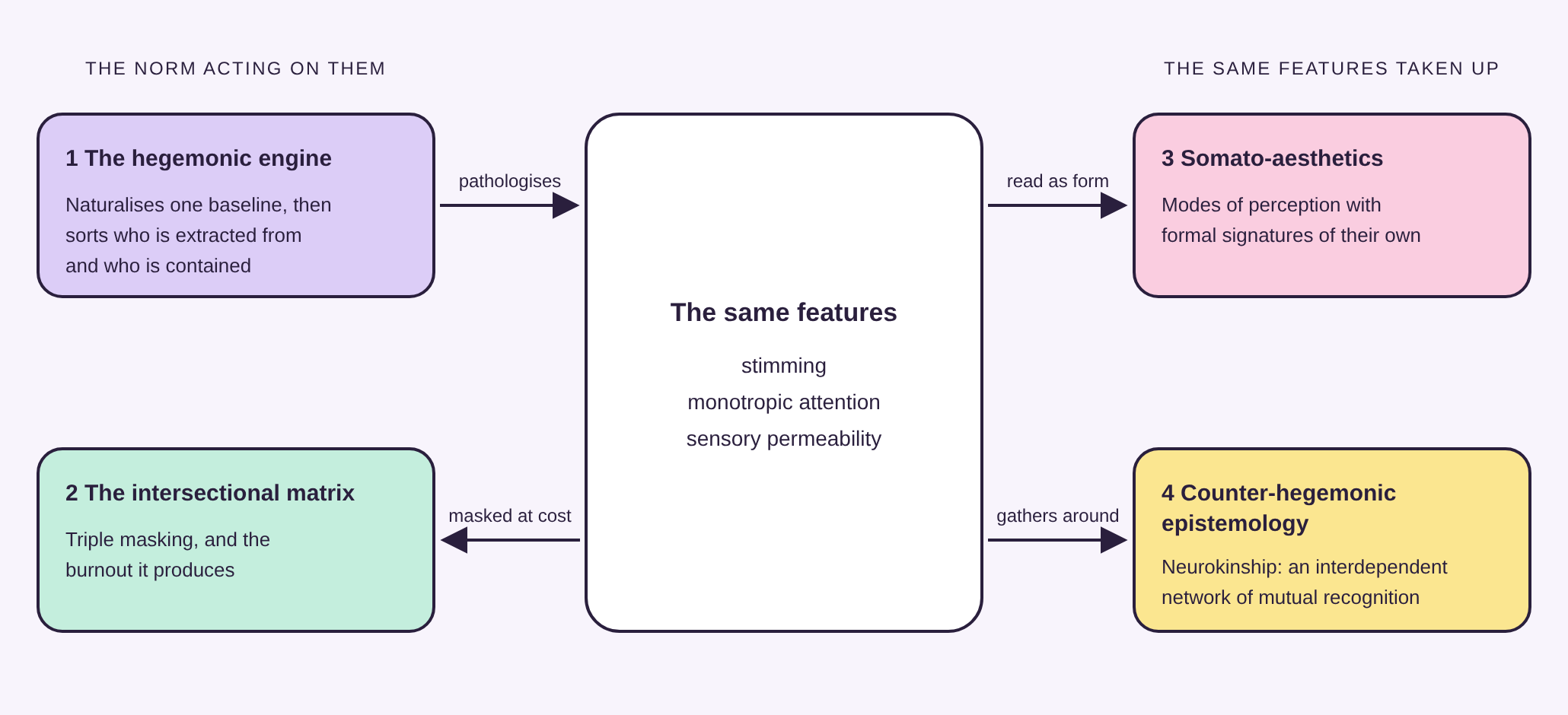
Suggested citation
Ezzy, T. (2026). The matrix of neuronormativity (Version 1.0) [Model]. Critical Neurodivergent Studies. https://criticalneurodivergentstudies.com/taxonomy/matrix-of-neuronormativity/
Where CNS sits
CNS is in conversation with the neurodiversity paradigm, critical disability studies and mad studies, and is not a subcategory of any of them.
From the neurodiversity paradigm it takes the recognition that there is no normal brain. It goes further in asking how diagnostic categories are produced historically and culturally, and whether accommodation within existing structures can ever be enough.
From critical disability studies it takes the insight that institutions discipline minds as well as bodies. It adds attention to the experience of thinking differently, which the social model’s focus on environmental barriers does not fully capture.
Origins
Critical Neurodivergent Studies was developed by Tess Ezzy (University of New England), who directs the Neurodivergent Creative Methods Lab. The Taxonomy on this site is the place of record for CNS terms, with a definition and citation for each.
Citing CNS
Ezzy, T. (2026). Critical Neurodivergent Studies. https://criticalneurodivergentstudies.com

